
.png)
How a Home Décor Brand Improved ROAS by 537% On Google with Quartile
537%
59%
14×
537%


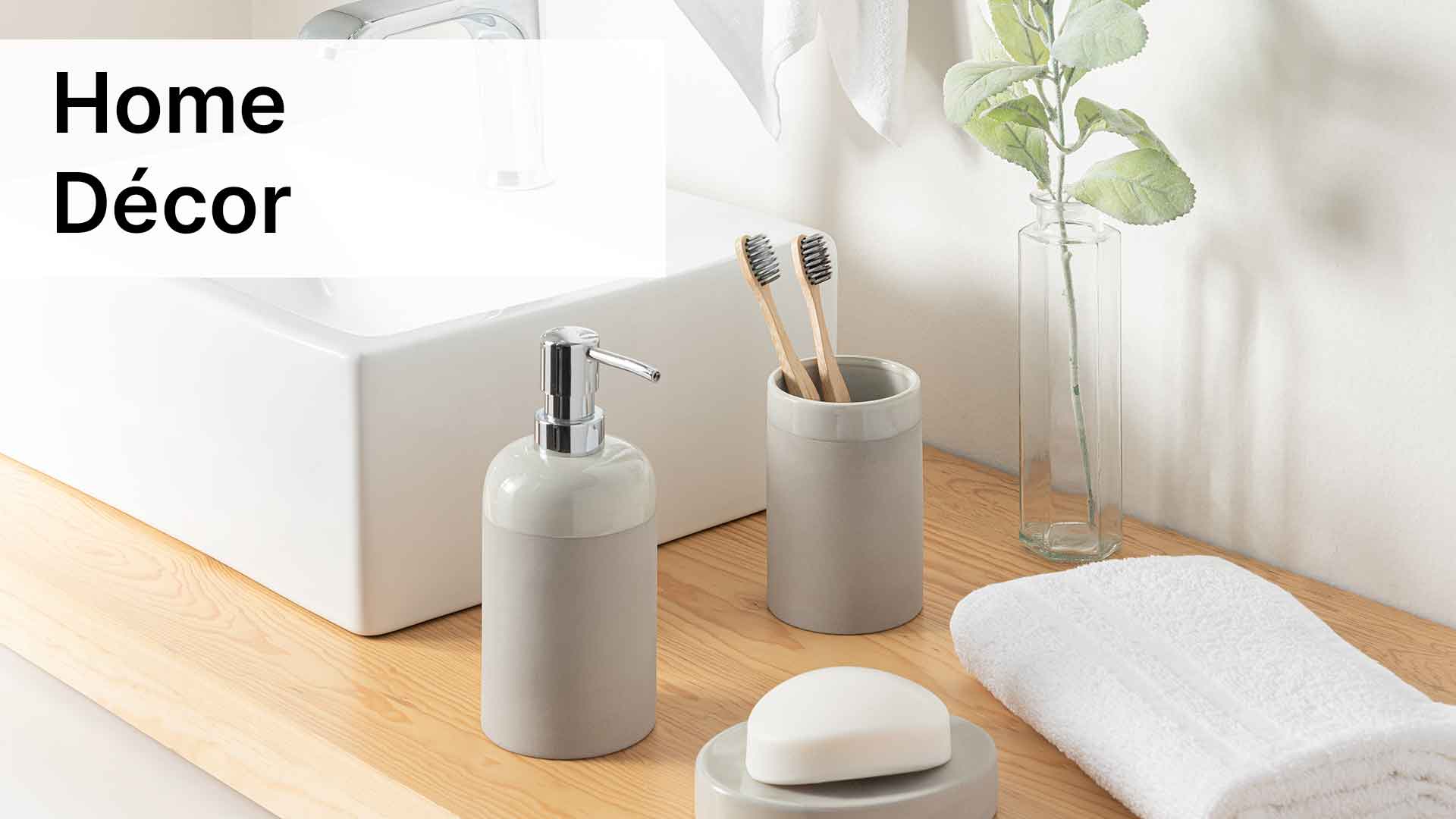
This direct-to-consumer home essentials brand specializes in design-forward kitchen and bathroom accessories, with a product line centered on glass soap dispensers for modern homes.
While the category itself is highly functional, the brand differentiates through aesthetic design—offering amber, fluted, square, and clear glass dispensers that appeal to style-conscious consumers.
Operating a catalog of more than 250 products, the brand sells primarily through its own website while expanding into additional marketplaces.
The Challenge
The brand entered a period of financial pressure across its ecommerce channels.
Organic demand for soap dispensers softened, while new tariffs and rising platform costs significantly increased the cost of importing inventory. At the same time, shipping delays limited availability of several top-selling products.
These pressures forced the brand to reconsider where and how it invested in advertising.
The team began shifting investment toward Google Ads, where spend could be controlled more directly than on marketplaces. But during the critical pre–holiday ramp-up period, budgets were reduced to protect margins.
That decision had an unintended consequence.
With fewer auctions entered and fewer conversions recorded, Google’s Smart Bidding systems lost the signals needed to optimize. Efficiency deteriorated quickly. Customer acquisition costs rose and conversions dropped sharply.
The brand needed to restore performance—but without increasing risk or sacrificing profitability.
Why Quartile
The challenge wasn’t simply campaign performance. It was signal quality.
Performance Max relies on clean conversion signals and strong product data to make optimization decisions. When those signals become diluted by inconsistent margins, fluctuating budgets, or weak product segmentation, the algorithm struggles to prioritize the right outcomes.
Many teams respond to that situation by rebuilding campaigns or testing new bidding strategies.
Quartile took a different approach.
With deep experience managing automated advertising systems at scale, Quartile understood that the real issue wasn’t the campaigns themselves—it was the inputs guiding the algorithm.
Rather than resetting performance history, Quartile focused on improving the signals feeding the system. That required a combination of technical expertise, margin discipline, and strategic restraint—knowing when to intervene and when to let the algorithm work.
This balance between human judgment and algorithmic optimization is where Quartile’s expertise proved critical.
The Solution
Instead of rebuilding campaigns during a volatile period, Quartile focused on stabilizing the account’s learning environment.
The entire account operated on Google Performance Max campaigns using a Maximize Conversion Value strategy with Target Return on Ad Spend (ROAS).
Quartile began by restructuring how products were organized within the account.
The catalog was segmented into three distinct campaign tiers:
- A general catalog campaign
- A campaign dedicated to top-performing SKUs
- A campaign focused on foam soap dispenser variants
This segmentation allowed the algorithm to optimize each product group independently, ensuring high-performing items were no longer diluted by lower-margin products.
Next, Quartile applied margin-based product filtering.
Lower-profit SKUs were removed from advertising entirely, ensuring that conversion signals reflected only products capable of sustaining profitable growth. This step significantly improved the quality of data feeding the bidding algorithm.
Once the campaign architecture was aligned with profitability, Quartile introduced disciplined budget restoration.
Rather than aggressively increasing spend during a competitive period, budgets were expanded gradually across campaigns. This approach rebuilt Smart Bidding signals while maintaining strict cost control.
In short, Quartile didn’t try to outmaneuver the algorithm.
Instead, the team reshaped the environment around it—ensuring the system could optimize toward profitable outcomes.
Results & Impact
Over the following months, the account transitioned from instability to its strongest efficiency phase.
- ROAS improved by 537%, confirming that margin-aligned signals allowed automated bidding to scale efficiently
- Customer acquisition cost declined by 59%, restoring sustainable advertising economics
- Conversions increased fourteenfold, reflecting renewed auction participation and stronger optimization signals
- Conversion rate surpassed 7%, indicating improved alignment between promoted products and shopper intent
Most importantly, these gains were achieved without increasing risk or introducing aggressive spending strategies.
The turnaround demonstrated that when automated advertising systems receive the right signals, they can scale efficiently on their own.
Quartile’s role was ensuring those signals were correct.
Ongoing Value & Future State
With a profitability-aligned campaign structure now in place, the brand has a stable foundation for continued growth.
Quartile continues to monitor product performance signals, refine segmentation, and guide budget allocation as the catalog evolves. This disciplined framework allows the brand to expand advertising investment while maintaining the efficiency required in a competitive home goods category.
What began as a recovery effort has become a long-term performance strategy.
>>>Ready to achieve results like these? Book a demo with a Quartile expert<<<
38%
24%
24%
33%
%20(1).png)