
ChatGPT Ads: Key Takeaways and Results from Our OpenAI Webinar

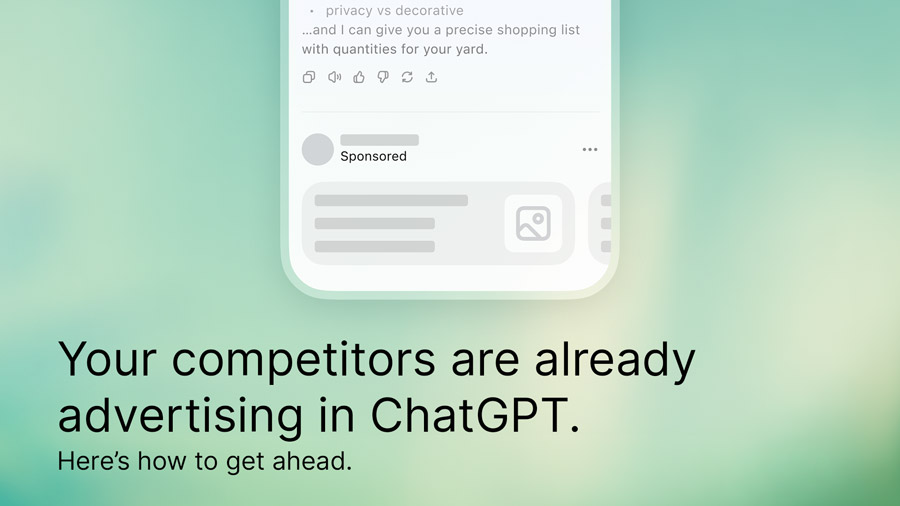


ChatGPT is becoming a new destination for product discovery. And as a technology partner supporting advertising in ChatGPT, Quartile is helping ecommerce brands reach shoppers as they research, compare, and decide what to buy.
But how does advertising in ChatGPT actually work? What makes it different from traditional search advertising? And, most importantly, what results are brands seeing?
To answer these questions, we recently hosted a webinar featuring Mik Kurian from OpenAI's ChatGPT Ads partnerships team. Together, we explored the growth of ChatGPT, how its advertising platform works, and what ecommerce brands should consider before investing in the channel.
We also shared real campaign results from two brands already advertising in ChatGPT.
Here are the biggest takeaways.
Why ChatGPT Ads Are Different
ChatGPT launched advertising in the United States in February 2026. It now runs ads in 89 countries, and OpenAI reports close to 1.2 billion weekly active users. Ads appear for users on the Free and Go tiers, which helps offset the cost of running advanced models for everyone.
What makes the channel distinct is context. Ads match to the conversation a user is having and, according to OpenAI, can also reflect a user's past preferences. A shopper asking for running shoes for a first marathon is in a very different place than someone typing three words into a search bar. OpenAI reports roughly 1.7 billion retail and ecommerce prompts happen on ChatGPT each week, and categories like retail, travel, and beauty are growing quickly.
Targeting options include zip code targeting for locally available products to country-level targeting across the 89 markets. Advertisers can choose cost per thousand impressions (CPM) or cost per click (CPC) bidding, and the platform runs on a second-price auction.
How the Ads Work
ChatGPT Ads offers two campaign types, search and feed, and Quartile manages both. Feed campaigns pull from your product catalog and appear in a shoppable placement below ChatGPT's organic answer, so shoppers scroll through products directly. That shortens the path from discovery to purchase.
Because feed campaigns run on your catalog, your product feed matters a great deal. Quartile connects your feed to ChatGPT and enhances it with three layers:
- Brand layer: how the brand connects to the customer's problem.
- Product layer: benefits, use cases, and proof points that explain why someone should buy each item.
- Variant layer: accurate size, color, and availability data, so the right product matches the right query.
Unlike a traditional keyword auction, feed campaigns use context hints, short phrases that guide when your ads appear. Examples include "lightweight trail running shoes for rocky terrain" or "cushioned everyday running shoes for beginners training for their first 5K." ChatGPT does not yet report which context hints perform best, so Quartile starts with broader hints, then narrows them and splits them into separate campaigns as learnings come in. That campaign structure shows you which hints work.
[CTA_MODULE]
Where the Click Goes
Brands can send shoppers to their own website or to their Amazon listing. Each has trade-offs.
Driving to your own site means you own the customer data and can use it for future segmentation. It also makes it easier to track direct and paid ChatGPT traffic through tools like Google Analytics 4 (GA4) or Shopify.
Driving to Amazon lets you earn the Amazon Brand Referral Bonus, which is typically about 10% of the sales driven through ChatGPT, depending on category. Some brands send traffic to both.
How to Measure ChatGPT Ads Performance
One of the most important lessons from the webinar was that brands should look beyond the performance reported directly inside their advertising campaigns.
ChatGPT keeps organic answers and ads separate, and that separation is intentional. Advertising does not change what ChatGPT recommends, and that separation protects user trust.
That separation also makes it important to understand how customers interact with a brand across multiple touchpoints.
For example, a shopper might discover a brand through an advertisement but return later through a direct visit, a branded search, or another ChatGPT conversation.
Those interactions may not all appear in the original ad's attribution reporting.
Quartile evaluates performance using both paid advertising metrics and broader business indicators.
Paid advertising performance includes:
- Return on ad spend (ROAS)
- Cost per click (CPC)
- Click-through rate (CTR)
- Ad-attributed conversions and revenue
Broader business performance includes:
- Organic traffic from ChatGPT
- Branded search activity
- Direct website sessions
- Conversion rates and order growth
Tracking these metrics together helps advertisers build a more complete picture of how ChatGPT fits into their customer acquisition strategy.
This is particularly important for an emerging advertising channel, where customers may interact with a brand multiple times before purchasing.
ChatGPT Ads Results: Two Ecommerce Case Studies
The potential of ChatGPT advertising becomes clearer when looking at real campaign performance.
During the webinar, we shared results from two ecommerce brands operating in very different product categories.
Case Study 1: Technical Lighting Brand Improves ROAS by 153%
For brands selling technical products, shoppers often need more than a basic product description before making a purchase.
A lighting brand with a highly technical catalog and specification-driven SKUs provides a useful example of how ChatGPT Ads can perform in a category where product details matter.
Within a couple of months of launching ChatGPT Ads, the brand saw substantial performance improvements compared with the eight weeks before launch.
The results:
- 153% improvement in ROAS
- 38% increase in click-through rate
- 37% decrease in cost per click
- 75% increase in organic orders originating from ChatGPT
Organic ChatGPT traffic was already present before the advertising launch and continued growing alongside paid campaign activity.
These results demonstrate how a technical product category can generate meaningful paid advertising performance in ChatGPT, while reinforcing the importance of tracking organic activity separately.
Case Study 2: A Furniture & Home Decor Brand Achieves 4.7x ROAS
AFA Stores, a large furniture and home decor retailer with more than 50,000 SKUs, represents a different advertising challenge.
With an extensive catalog spanning numerous product types, effective product discovery is particularly important.
Shoppers researching furniture frequently have detailed requirements involving dimensions, materials, style, room layout, and functionality.
ChatGPT's conversational shopping experience creates opportunities to connect products with those specific needs.
The results:
- 4.7x return on ad spend
- 112% growth in orders from direct ChatGPT traffic
- 11% improvement in overall conversion rate
The results show that ChatGPT Ads can deliver measurable performance for retailers managing large, diverse product catalogs.
They also highlight why advertisers should monitor both paid results and broader traffic trends when evaluating the channel.
While the increases in organic and direct activity occurred alongside advertising, they should not automatically be attributed to the paid campaigns.
Is ChatGPT Right for Your Category?
A common assumption among ecommerce brands is that shoppers aren't using ChatGPT to research their particular products.
But product discovery doesn't always begin with a product name.
A shopper might ask what gift to buy for a family member, which material works best for a specific application, or what product would solve a problem they're experiencing.
These conversations create opportunities for brands across a wide range of categories.
Across the categories Quartile has examined, shoppers are already asking product-related questions in ChatGPT.
In fact, try this: open ChatGPT, ask a few questions where your brand might be relevant, and see which ads appear. You’ll often find competitors are already there.
Watch the Webinar on Demand
Want to go deeper?
Watch our webinar featuring OpenAI's Mik Kurian and Quartile for more insights into ChatGPT advertising, campaign structure, product feed optimization, measurement, and real advertiser results.
[CTA_MODULE]