
How to Win More Amazon Customers This January



Every January, shoppers decide this is the year they change something. They start going to the gym and buy their first pre-workout. They set a weight-loss goal and try a whey protein. They clean up their diet, add a multivitamin, or start a new skincare routine.
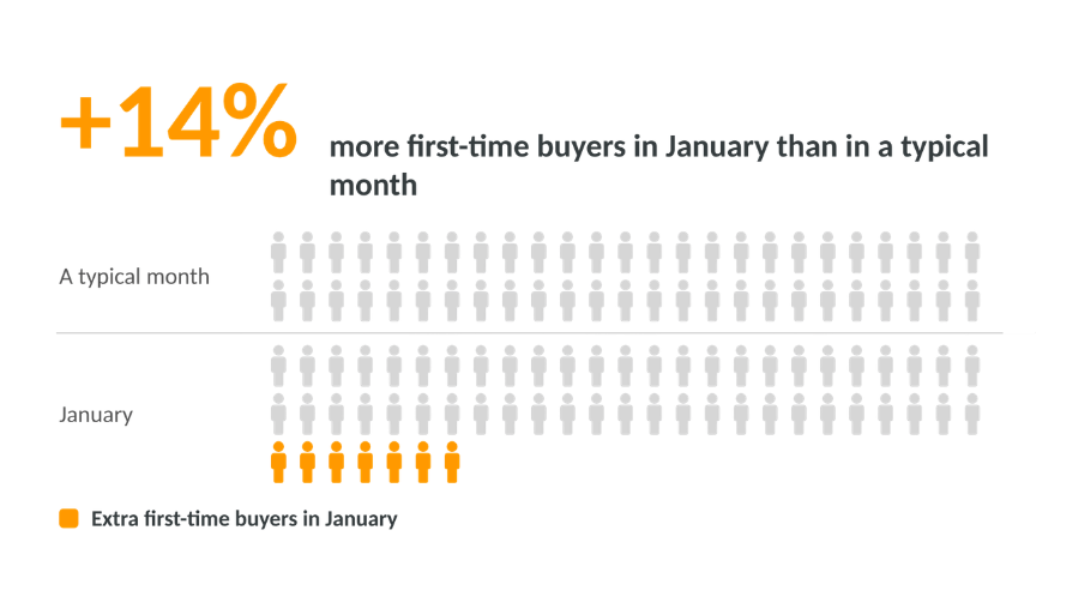
Most are buying from a brand for the first time. January brings about 14% more first-time buyers than a typical month. That makes January the best month of the year to win new customers.
These shoppers choose their brands in the first weeks of January, and the deals that reach them are set weeks before the year starts. So how do you win more of these new customers for your brand?
Categories That Should Pay the Most Attention
The January shift is biggest for products tied to a personal goal that shoppers buy again. If your brand sells in these categories, January is your most important acquisition month:
- Vitamins and supplements
- Protein and sports nutrition, such as whey protein and pre-workout
- Wellness products
- Skincare and beauty
Healthier grocery and snack brands see the same pattern as shoppers change how they eat.
These products share two traits:
Shoppers buy them to start a new habit, and then they run out. That second trait is what turns a January first order into a customer who reorders all year.
Why a January Customer Is Worth More Than One Order
A shopper who starts a routine in January doesn't buy once. They run out, and they come back. A new customer won in January spent 2.1 times their first order over the next 12 months†.
That's why the first order matters so much. The brand a shopper picks in January is the brand they reorder in February, March, and beyond. Win the first order, and the next ones follow. Miss it, and you're trying to pull that shopper away from a brand that's already part of their routine.
Two Kinds of January Shoppers
January's first-time buyers don't all shop the same way. Plan for both.

Many brands lean on ads alone to reach these shoppers. The brands that win January pair their ads with the right offer: a deal that gets the deal seeker to try you, and a Subscribe & Save offer that turns the routine builder into a scheduled customer.
Your Sponsored Ads still do their job. They meet shoppers when they search and bring them to your product page. The offer is what makes them buy from you instead of the brand listed next to you.
A Modest Discount Does the Work
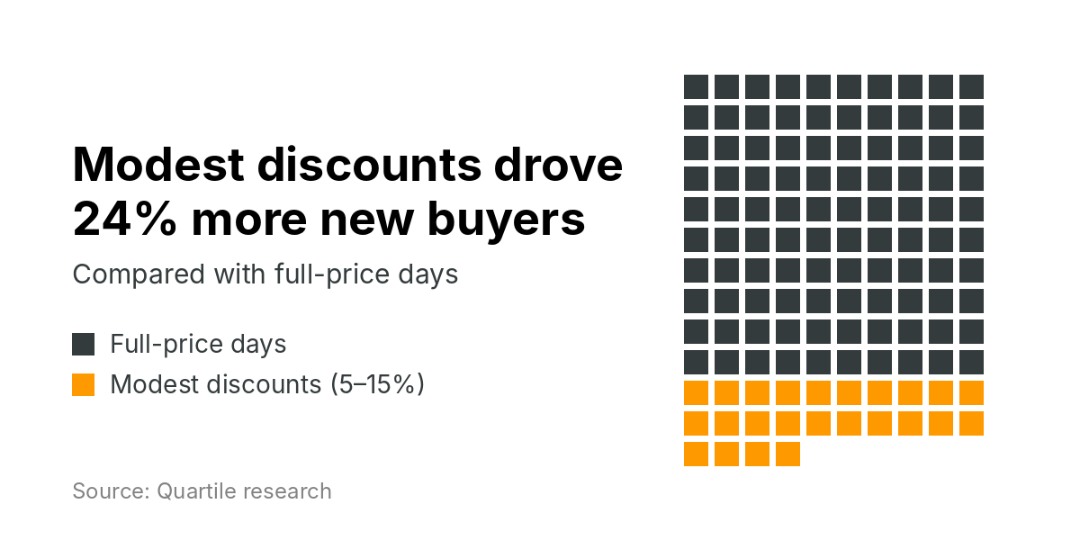
You don't need a deep discount to win January's new shoppers. Our data has found that on the same product, days with modest promotions from 5% to 15% off created ~24% more new buyers than full-price days. Those buyers came back as often as customers who paid full price.
If you've kept promotions out of your plan, it's usually for one of two reasons:
"We're not a discount brand."
This concern comes from discounting at its worst: a brand that runs sales so often that shoppers stop paying full price. That risk is real. It comes from how often and how widely a brand discounts, not from discounting itself.
On Amazon, a promotion can be far narrower than a sale. You choose the products, the dates, and who sees the offer. You can aim it at shoppers who have never bought from you, or at customers who have bought before and haven't subscribed. Your loyal customers keep paying what they always pay. When the window closes, your price goes back to normal.
Premium brands use first-order offers all the time: a sample at the counter, an introductory price, a trial size. None of that makes them a discount brand. It lowers the risk of trying something new, and lowering that risk is exactly what a January shopper needs before switching to a brand they've never bought.
Our studies support this: Shoppers won with a small offer aren't bargain hunters who leave after one order. They come back as often as customers who paid full price. A small offer doesn't change who your customers are. It brings you more of them.
"Our margins are too thin for discounts."
Start with what you already spend. Every new customer you win through ads comes with an acquisition cost. You're already paying to win customers. The real question is which way of paying wins you customers who stay.
Then measure the discount over a year, not one order. The first order is where a discount costs you. The orders after it are where you earn it back. Here's what new customers spent over 12 months, grouped by the discount on their first order:
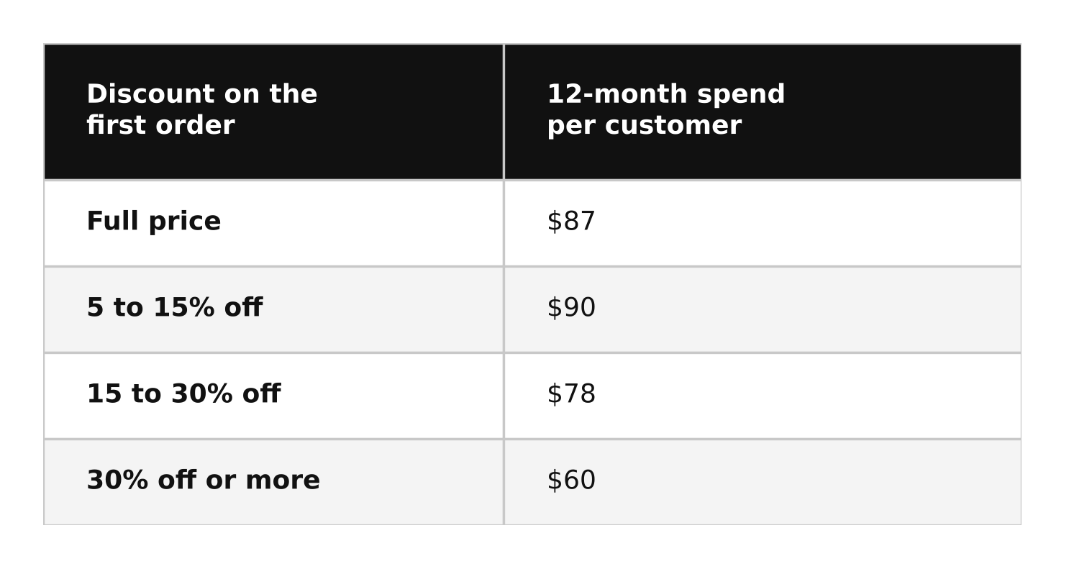
The depth of the discount matters. A small discount tips over shoppers who already wanted your product, and they keep buying at your regular price. A deep discount attracts shoppers who came for the price, and they leave when the price goes back up. Your margin risk comes from deep discounts, not small ones.
A small offer also earns some of its cost back in two ways:
- It lifts your sales velocity. More orders in a short window is one of the strongest signals in Amazon's organic ranking. Higher rank brings shoppers to your page without a paid click.
- It converts traffic you've already paid for. Most shoppers who land on your product page from an ad leave without buying. A small offer turns more of those paid clicks into orders, so your ad spend works harder.
To protect your margin, follow four rules:
- Keep it small. The study shows the drop starts as the discount gets deeper.
- Choose products customers reorder. The first purchase pays off only if customers buy again.
- Keep it time-bound. A January window, not a permanent price.
- Exclude your current subscribers. They're already buying. Save the margin for shoppers you haven't won yet.
What about deal events?
Amazon's deal events set a minimum discount, and it's deeper than the modest offers above. Treat the event as a short, planned investment in visibility.
The deal badge puts you in front of shoppers who are ready to try something new, exactly at the moment they're looking. Keep the window short, put it on your best reorder products, and pair it with a small Subscribe & Save offer so the buyers it brings in come back. Outside the event, keep your offers modest.
The Deadline Comes Before January Does
Amazon's January deal events put a deal badge in front of shoppers who are ready to make a change. That's why so many health and wellness brands want in. To join, brands submit their deals weeks in advance. Deal submissions typically close 4 to 6 weeks before an event.
That puts your decision in November, not January. Wait until the new year, and your competitors' deals are already live, their badges are already on the page, and the shopper who wanted a new routine has started it with someone else. Why leave those customers to your competitors?
Here's what to have in place before deal submissions close:
- Pick your products. Choose the best sellers your customers reorder most, not the slow sellers you want to clear.
- Submit your event deal. Set it on those products before the deadline.
- Plan your Subscribe & Save offer. Decide how a first order from the event becomes a subscription. A dedicated Subscribe & Save page and a small offer stacked on your event deal do most of that work.
- Line up your ads. Make sure your Sponsored Ads budget can meet the extra January searches.
Questions to Answer This Month
- Which of your products do new customers buy first, and which do they reorder?
- Will your best seller carry a deal badge in January, or will your competitor's?
- If a January customer spends more than twice their first order in a year, what is it worth to win one?
Build Your January Plan Now
Deal submissions for January close weeks before the year starts. The brands that win January's new customers make their plan now.
If your category gets 14% more first-time buyers in January, how many of them will choose you?
Already a Quartile customer? Reach out to our Growth team today to get started planning.
[CTA_MODULE]
Request a customized January plan for your brand.
All Data Sourced: Quartile data across the top consumable brands, 2022 to 2026.